DeBÍ TeNER MaS AMoR: What Do We Take Away From Bad Bunny’s Historic Halftime Show?
Written by Celyse Ramirez | February 11, 2026
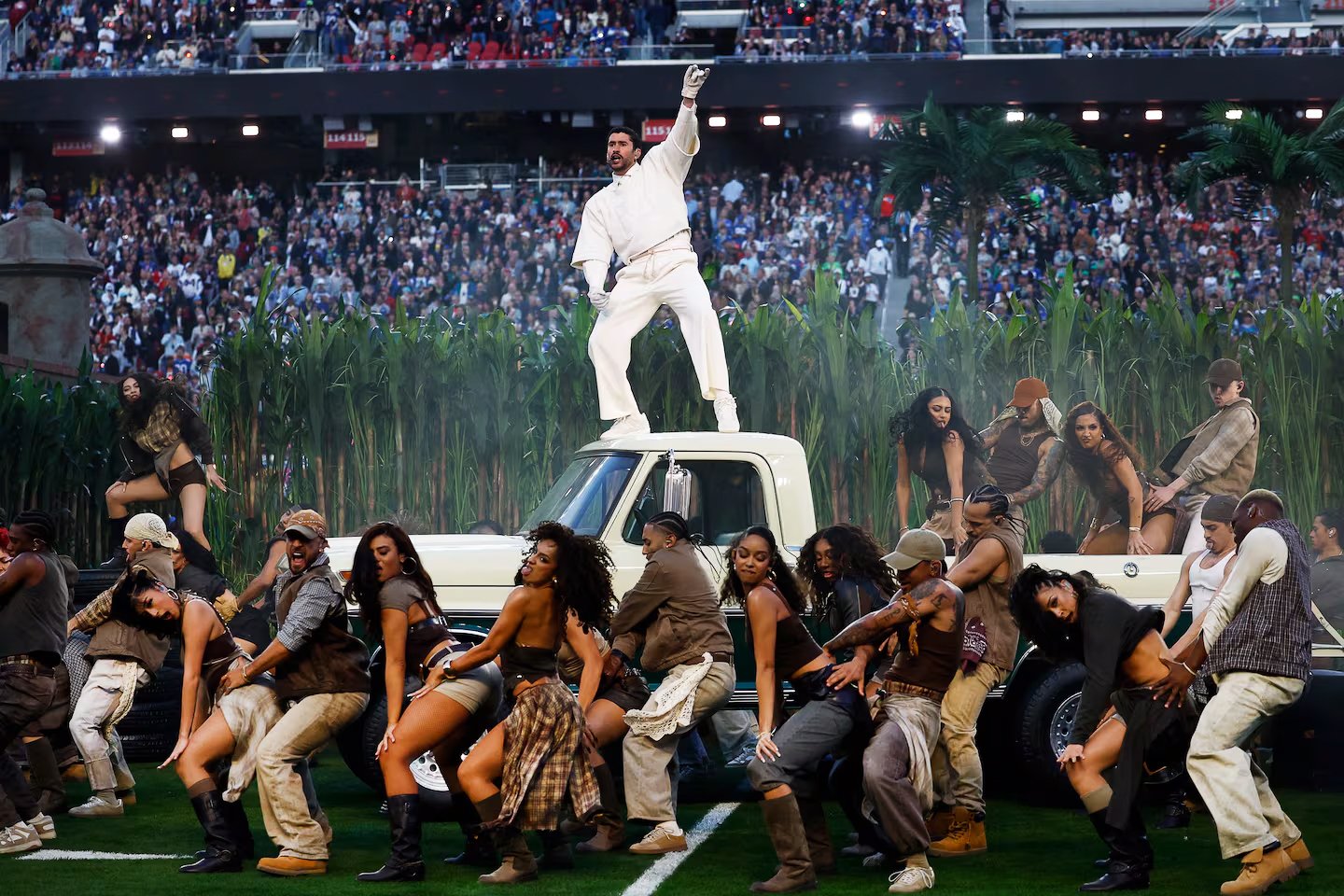
photo courtesy of Variety
A decade ago, Benito Antonio Martínez Ocasio was bagging groceries in Vega Baja, Puerto Rico. This past weekend, he took to the world’s biggest stage to unapologetically prove the success that comes with believing in yourself and preaching that the only thing more powerful than hate is love.
While he transformed Levi’s Stadium into a little Puerto Rico, we were doing the same in our homes. In my family’s case, that meant a huge spread of food, flags and banners on every wall, and a Titi passionately playing the guiro the entire show. A journey that has become as much about cultural pride as it is about music.
Over the past year, Bad Bunny has redefined what global success looks like. Between setting the record for halftime show views (136.4 million) and riding the wave of a transformative album run with DeBÍ TiRAR MáS FOToS, he has surpassed over seven billion streams, inspired a 30-night residency, and made history as the first Spanish-language album to win Album of the Year at the Grammys. DtMF resonates deeply in today’s climate, with personal storytelling and commentary reflecting the lived experiences, resilience, and joy of Latin communities in a world that has too often pushed them to the sidelines.
The halftime show wasn’t always the cultural and political spotlight it is today. And while some artists used this year’s event as an opportunity for extravagant displays rooted in hate and bigotry, Bad Bunny followed in the footsteps of the previous year’s Kendrick Lamar. He took advantage of those 13 minutes not just to entertain, but to start meaningful conversation and confront growing white nationalist rhetoric by quite literally “televising the revolution.”
Now, let’s get into the breakdown!
If you are Latin/Hispanic, you likely didn’t need to dig deep for many of the references in the show to hit close to home. And for everyone else watching, Benito made sure to quite literally walk you through the past, present, and future of the island’s culture.
The show opens with the 2022 track “Tití Me Preguntó,” setting the scene in Puerto Rico, overlooking an endless landscape of sugarcane fields. Calling on both the past and the present, it nods to years of exploitation of Puerto Rican land and labor through sugarcane farming while also acknowledging how generational farmers continue to shape the island’s economy today.
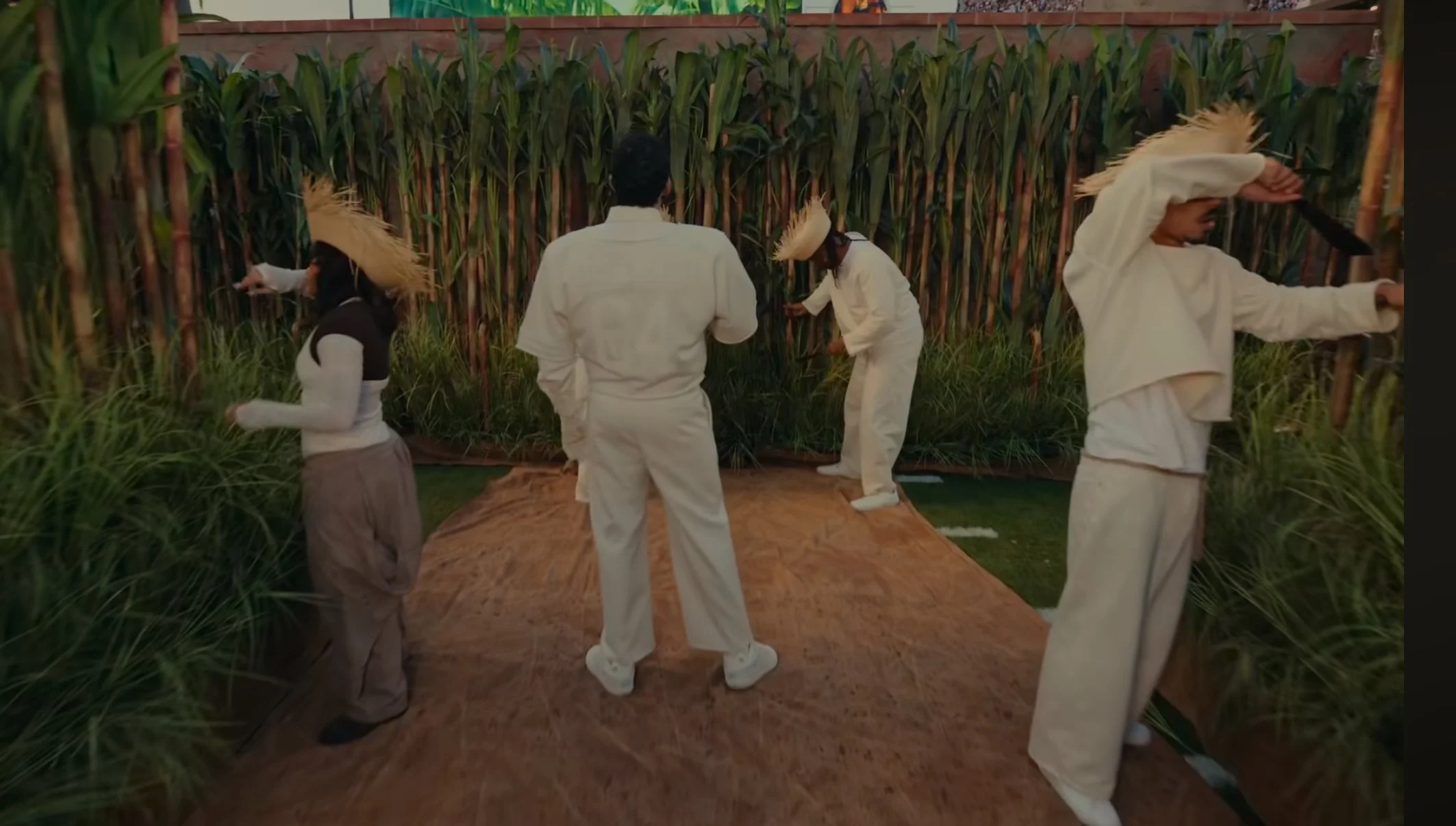
photo courtesy of NFL and Apple Music
From there, he introduces pillars of everyday life that exist not only in Puerto Rico but throughout the Latin diaspora across the country. The coco frío and piraguas, placed next to a table of “tíos” playing dominoes, trigger a flash of nostalgia or an immediate sense of familiarity. These details, like the boxers’ gloves, made me smile, reminding me of the mini pair I saw hanging on the rearview mirror growing up. There is a little piece of home and family to relate to for everyone in this maze of chaos.
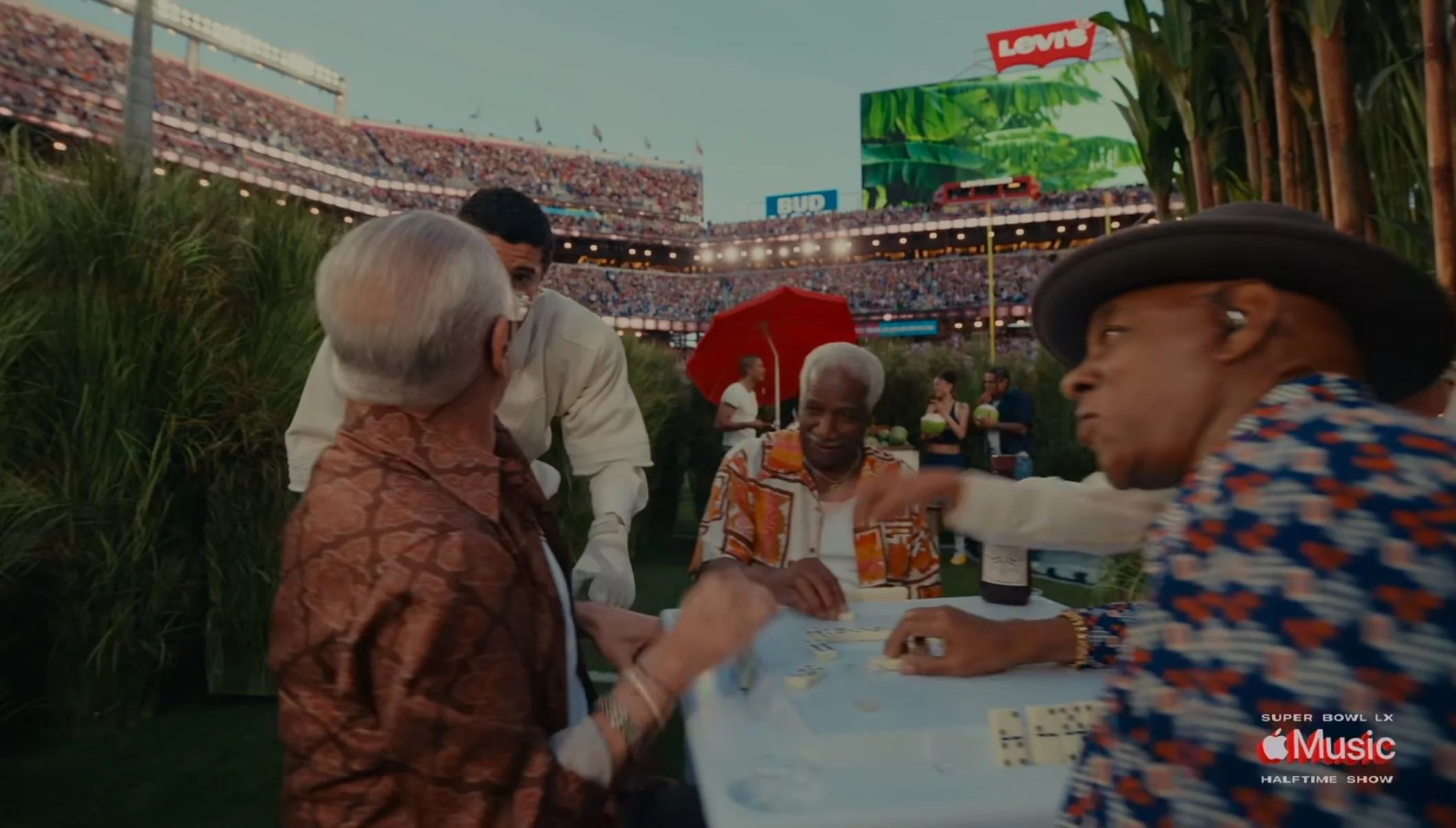
photo courtesy of NFL and Apple Music
“Yo Perreo Sola,” the 2020 Billboard-charting hit and club anthem, kicks off the celebration of women, the queer community, and personal liberation outside the famous Casita. Perreo, often shamed and policed much like women and the queer community for being “too vulgar,” was uplifted and reclaimed, woven seamlessly by the dancers into the vibrance of Puerto Rican culture being showcased. I had the privilege of attending the No Me Quiero Ir de Aquí residency in August of last year, and this segment instantly transported me back to the nosebleeds of El Choliseo.
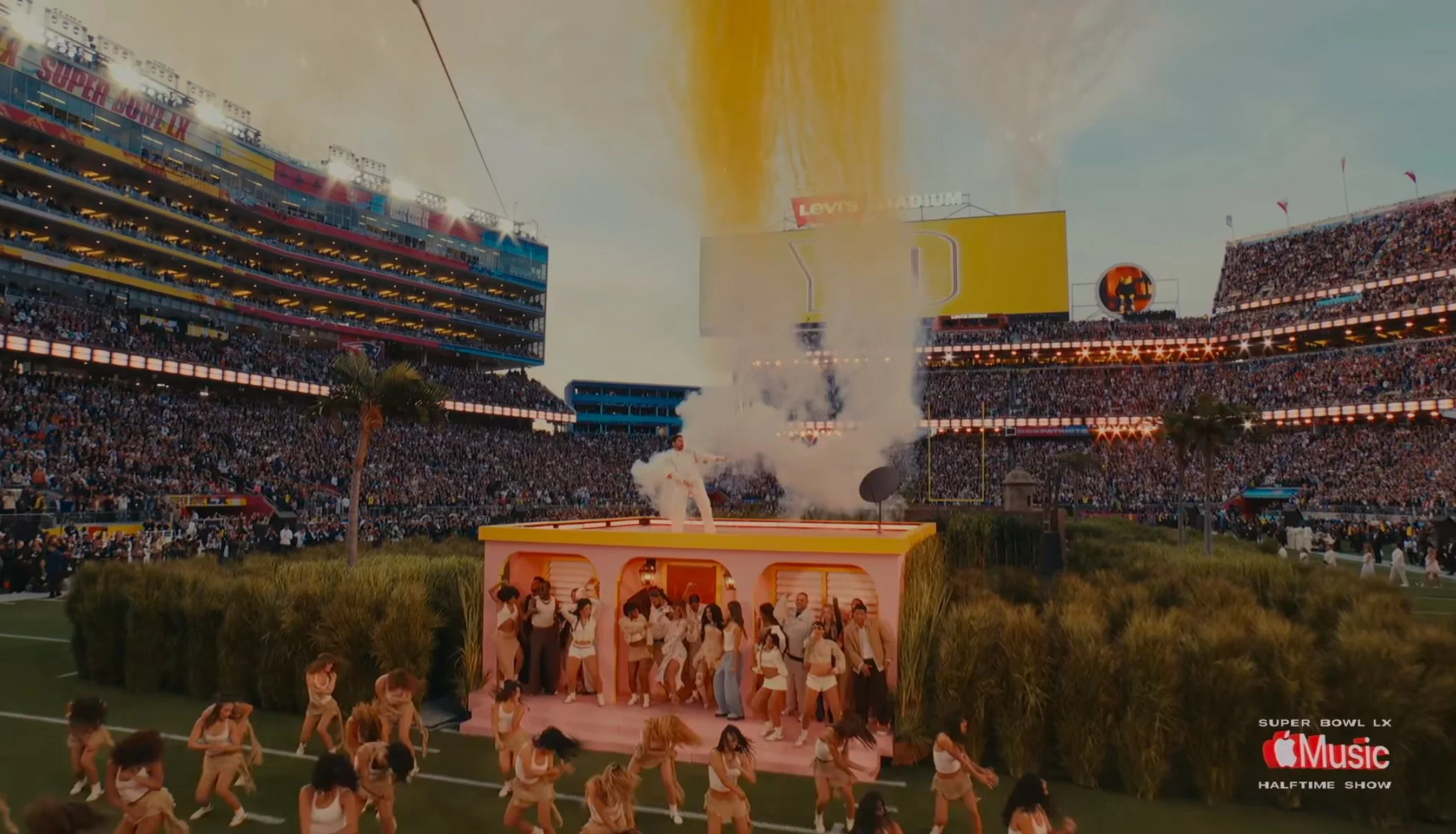
photo courtesy of NFL and Apple Music
The Casita is also where we see all of Benito’s special guests come through: actors Jessica Alba and Pedro Pascal, alongside fellow collaborators such as Karol G, Young Miko, and Cardi B. They may stand out to our eye, but zooming out, they are meant to blend with everyone else on the porch. Partying together cements the idea at the center of reggaeton, that we are equal when united by a good time. As we dance out of the Casita set to a medley of songs by reggaeton legends — “Pa Que Se Lo Gozen” by Tego Calderón, “Dale Don Dale” by Don Omar, “Noche de Travesuras” by Héctor El Father, and of course America’s favorite, “Gasolina” by Daddy Yankee.
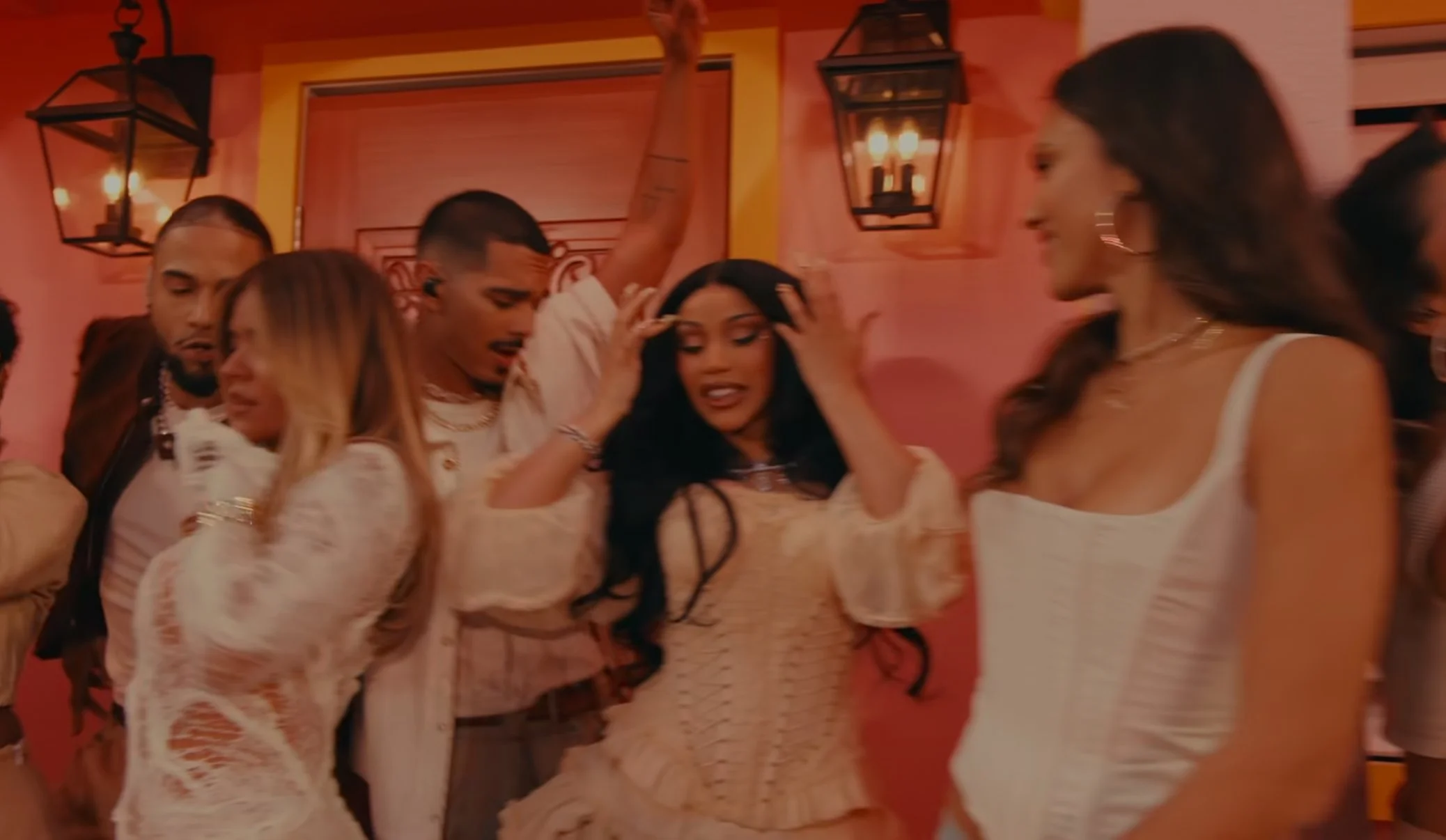
photo courtesy of NFL and Apple Music
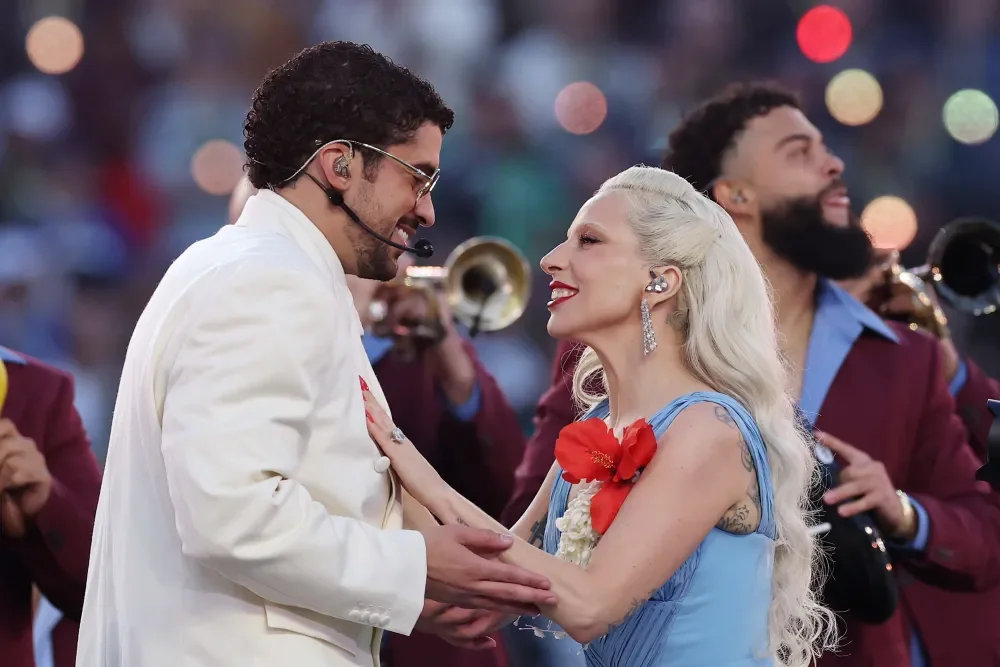
¡Hay una boda! As much as Bad Bunny doesn’t want his own wedding, he was more than happy to host a beautiful ceremony alongside Mother Monster, Lady Gaga. Singing a salsa remix of “Die with a Smile,” which we are bound to hear looping on Spanish radio any day now, perfectly illustrates how, at the center of Latin culture, dancing and togetherness are healing. The chorus of “Die with a Smile” couldn’t have been more fitting to speak for love in a time where it feels like “the world is ending,” dressed in custom Luar, representing Brooklyn-based Dominican designer Raul Lopez. He highlights in a recent Vogue interview that the color of Gaga’s dress, “light blue [is] a nod to the Puerto Rican flag of 1895.” She embodies the beauty of collaboration.
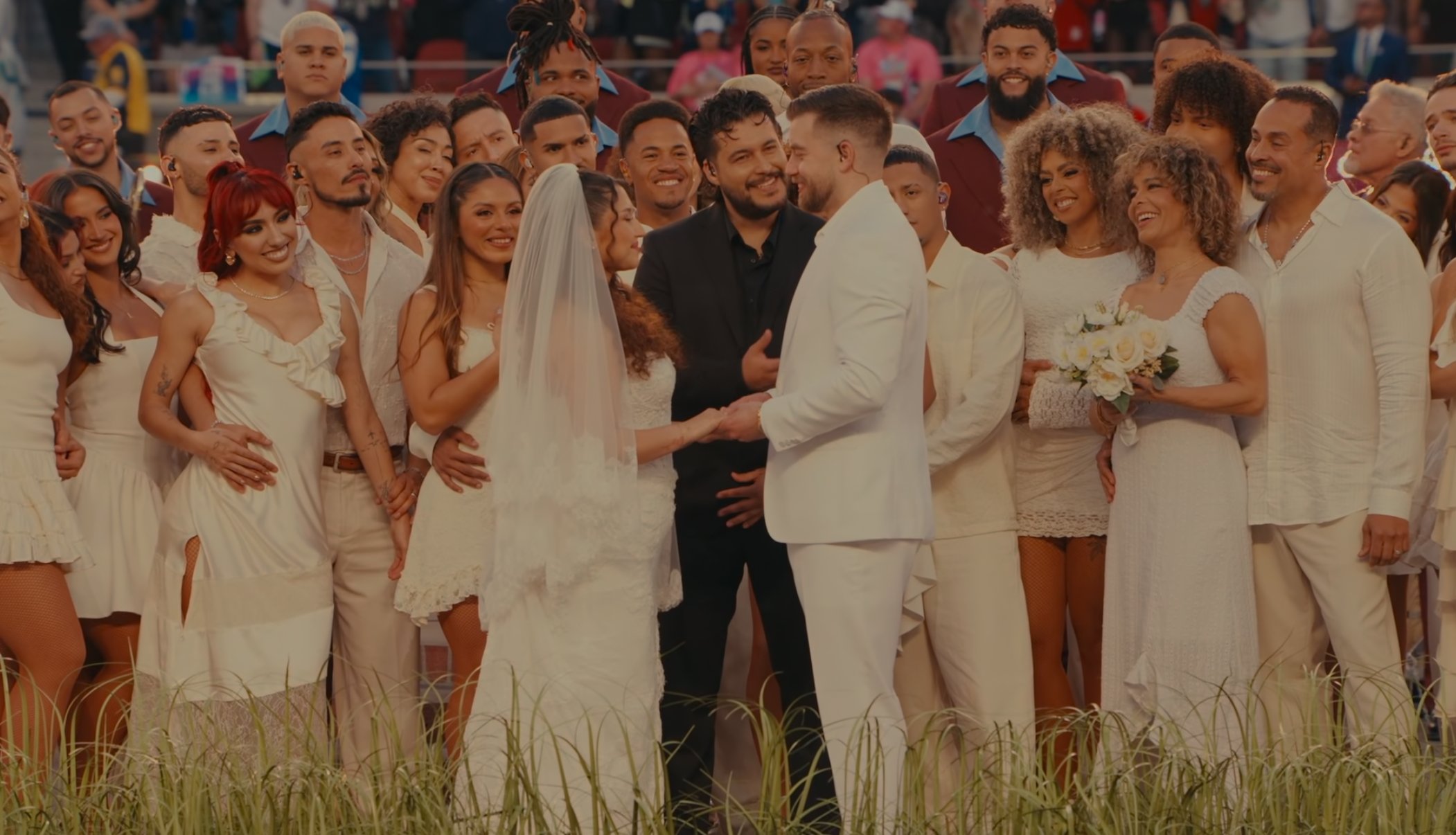
photo courtesy of NFL and Apple Music
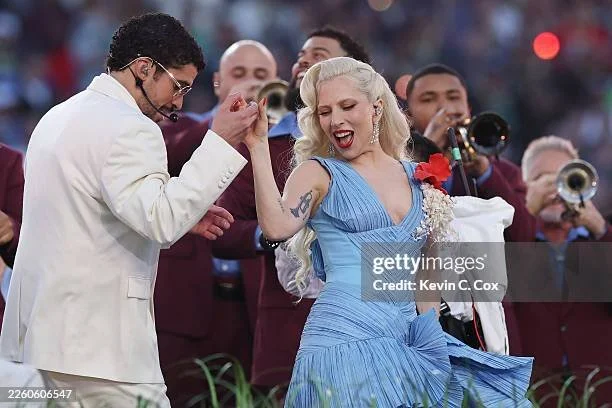
photo courtesy of Kevin C. Cox
Let’s also give a moment to the camera work, weaving through salsa partners of all ages and genders, adding another touch of authenticity that made me feel like I was navigating somewhere I’ve been before. Then an aerial pan to Bad Bunny’s trust fall into the colorful barrio block party that is “NUEVAYoL.”
Past the bodega, a break from the noise reveals a young Benito watching his most recent emotional Grammy speech. The setting of his family in the living room watching him on TV shows that he became the representation he wanted to see growing up. Then handing his past self the Grammy made the dream of becoming the greatest tangible. Calling back to earlier in the show, where Benito exudes gratitude for his support system, staring down the barrel of the camera into the eyes of millions, he speaks directly to the audience, just as he once might have needed someone to speak to him: “My name is Benito Antonio Martínez Ocasio. And today I’m here at Super Bowl 60, it’s because I never, never stopped believing in me. And you should, you should believe in yourself too. You’re more valuable than you think, believe me.”
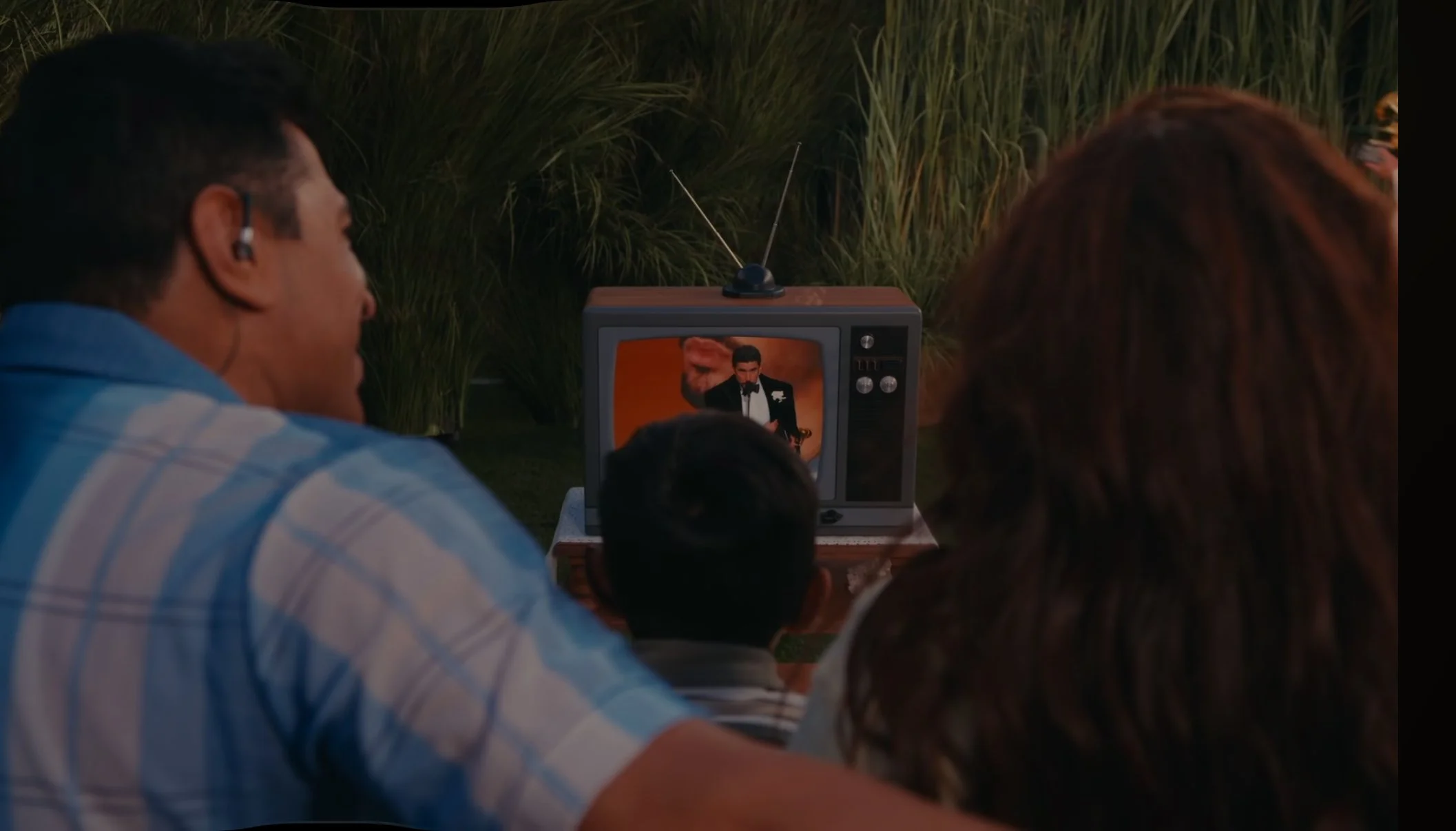
photo courtesy of NFL and Apple Music
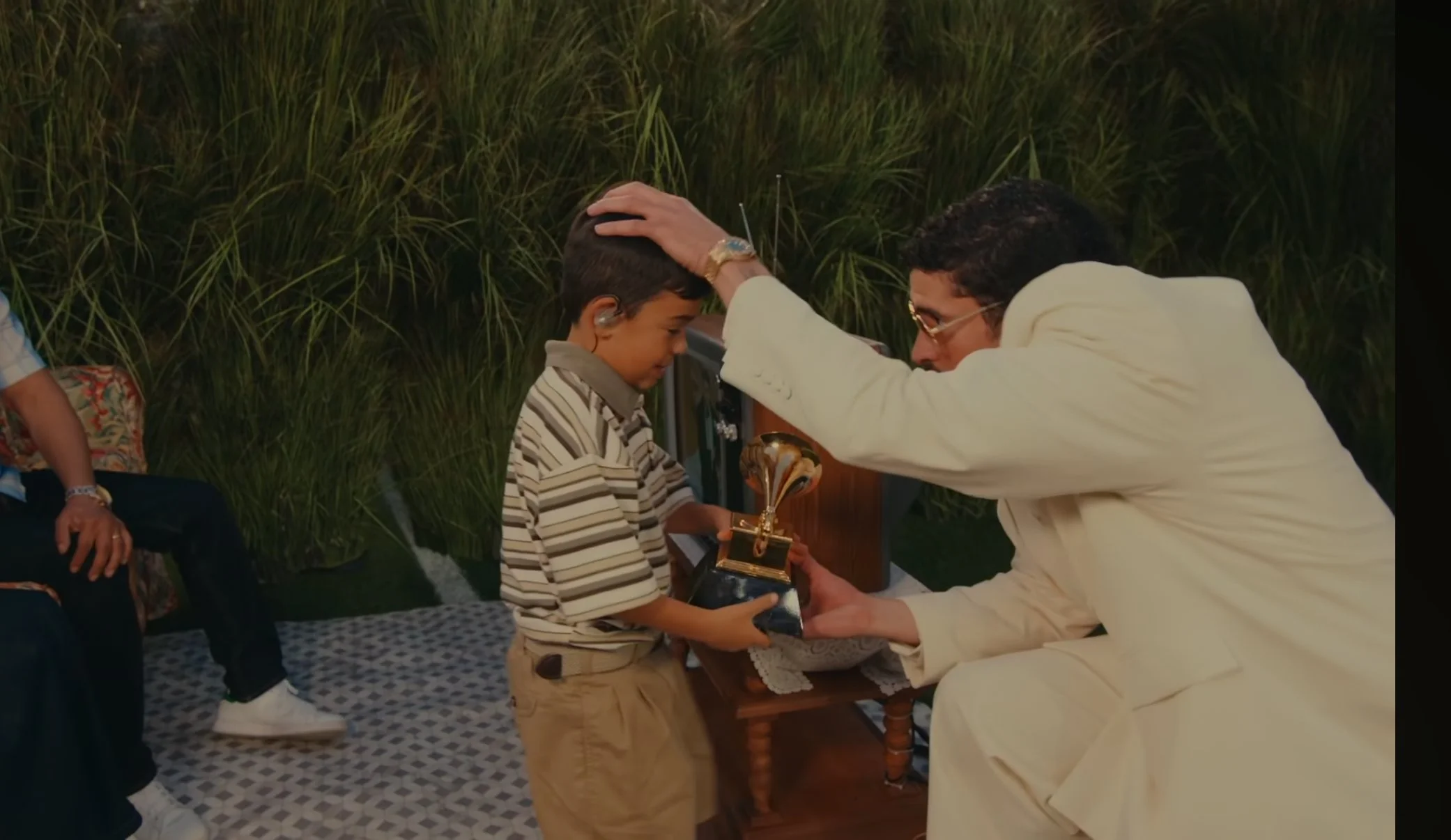
photo courtesy of NFL and Apple Music
One of the most impactful and standout symbols from the show comes from the performance of “LO QUE LE PASÓ A HAWAii.” Ricky Martin echoes the cry to stop the force of colonialism that invaded Hawaii in the lines:
Quieren quitarme el río y también la playa
Quieren al barrio mío y que abuelita se vaya
No, no suelte’ la bandera ni olvide’ el lelolai
Que no quiero que hagan
Saying, don’t let them take our rivers, beaches, neighborhoods where generations were raised; never let go of the flag or forget the sound of our land. Singing this message on the album’s signature plastic white chairs brings the message back to the roots.
“El Apagón,” accompanied by workers hoisted up on an electrical post while Benito bears the Puerto Rican flag on his shoulder. El Apagón, translating directly to “the blackout,” references the longest power outage in American history. In 2017, Hurricane Maria decimated the notoriously unreliable power grid and poor infrastructure on the island. This song emphasizes the frustration that built over the “328 days, or roughly 11 months,” reported by ABC News it took “for the island to restore power to all of the customers who lost it during the hurricane.” A strong visual of how the Trump administration chose then, and continues, to neglect over 3.4 million people.
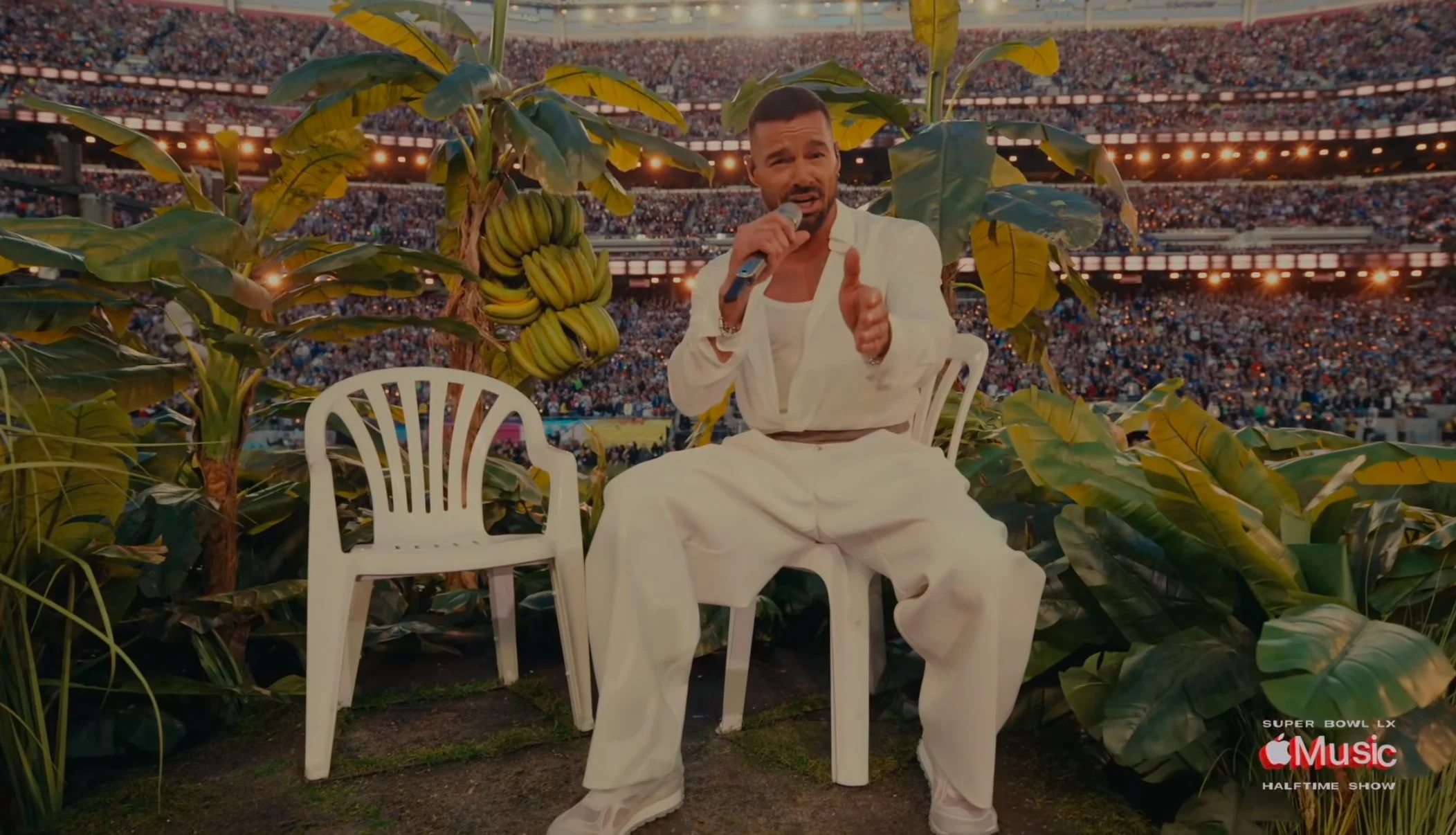
photo courtesy of NFL and Apple Music
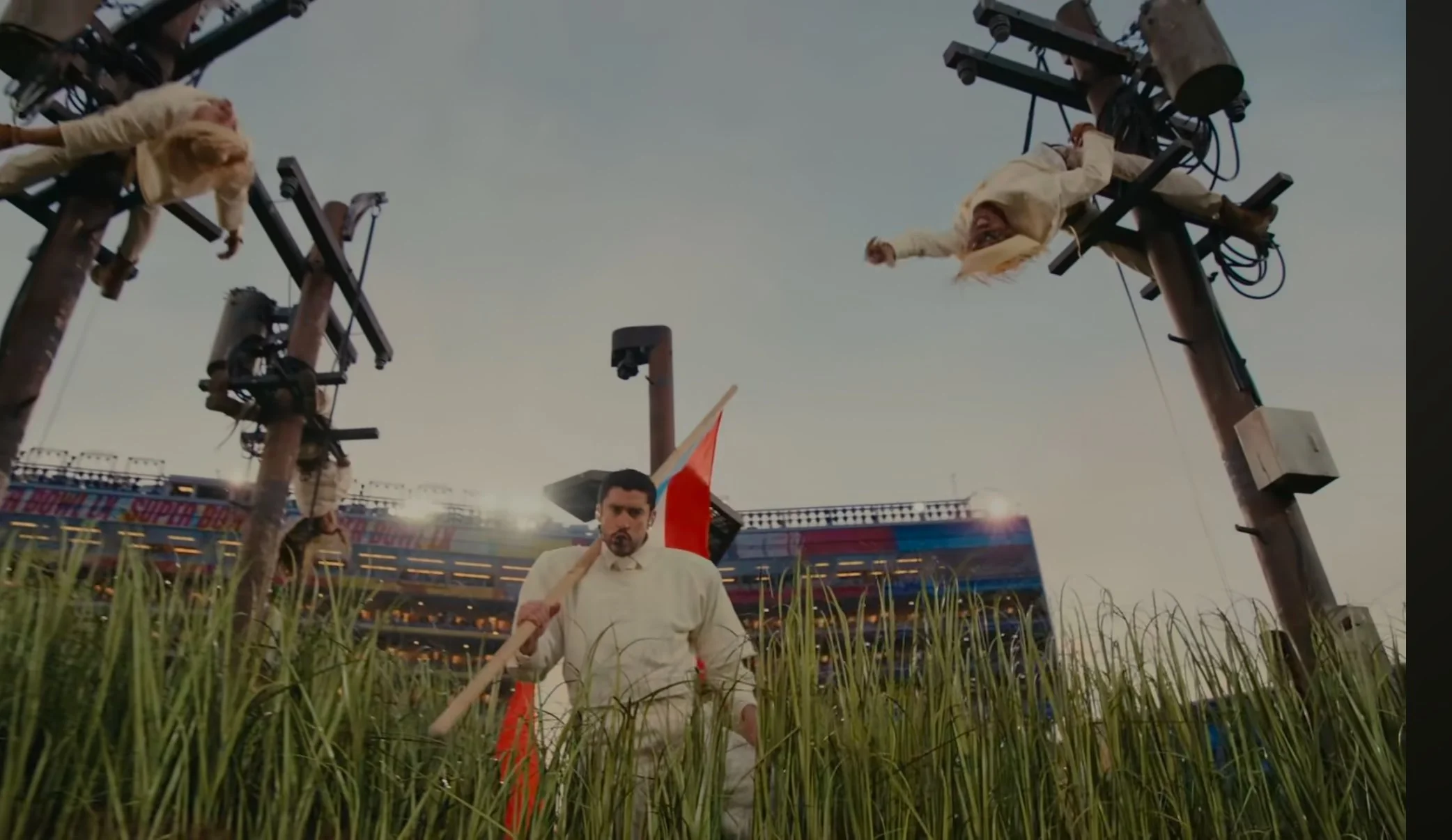
photo courtesy of NFL and Apple Music
“CAFÉ CON RON” rings out the intently crafted 13 minutes of symbolism and spectacle. The final song before closing on the title track, DtMF, ushers in a sea of flags representing countries across Latin America and the Caribbean that flood the camera’s view. This moment made me realize that you never really understand how much representation matters until you see it done right. I’m sure the majority of minorities agree that shouting out your heritage as the world’s biggest artist shouts it out in tandem is a special feeling that cannot be replicated. It’s only been 48 hours, and the glowing image of “The only thing more powerful than hate is love” sign has already become iconic. Transcending genre and language, it has been shared on countless Instagram, Facebook, and TikTok posts from people of all backgrounds. A reminder that the revolution to eradicate hate will succeed, driven by unity and love.
Interested in more Bad Bunny?
Watch No me quiero ir de aquí: Una Más- Bad Bunny’s live stream from his last show in San Juan, Puerto Rico to get the full immersive experience:
Like what you heard?
Stream DtMF and review the official setlist of the Halftime show
Have more thoughts? Me too!
Reach out to me @c_onthescene on instagram I’d love to hear your interpretations