J. Cole: The Fall Off That Never Came
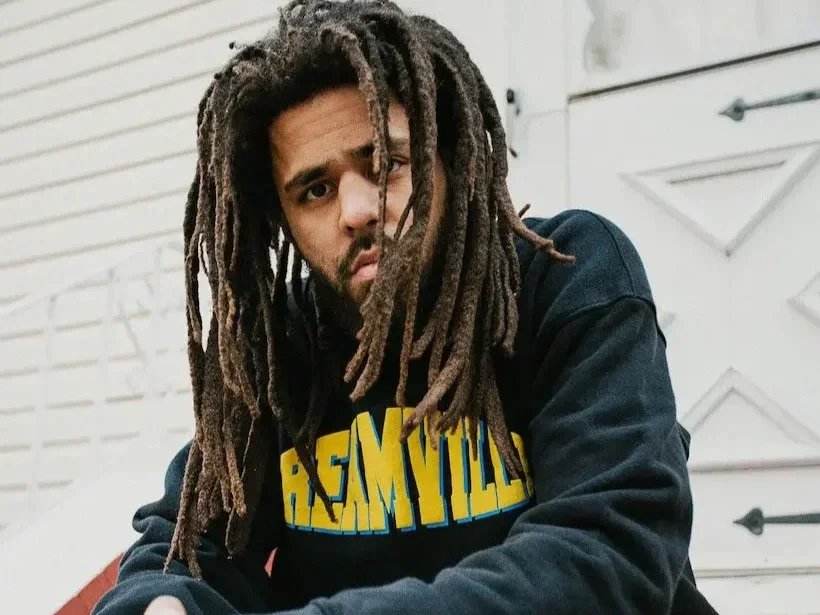
Photo Credit: David Peters
On December 29, 2020, J. Cole announced a series of albums and features that he referred to as “The Fall Off Era.” This era was to be highlighted by three large projects: The Off-Season, It’s a Boy, and The Fall Off, with his retirement arriving soon after the release of the final album listed. The years following this announcement have been, to say the least, tumultuous for the North Carolina rapper, from his status as a member of the “Big 3” of rap being questioned during the infamous rap beef of 2024 to his constant struggle to lose his middle-child and conscious rapper status, followed by the critically panned Might Delete Later.
That’s not to say he hasn’t seen some high points since the announcement of his final trilogy of projects. His single “Middle Child” became RIAA Diamond-certified and was indicative of a significantly more mature sound that he would adopt in his future projects. The Off-Season was well-received by critics and fans alike for its thoughtful lyrics, intricate production, and tasteful list of guest contributions from rappers such as 21 Savage on “My Life” (stylized as “m y . l i f e”) and 6LACK contributing a verse, with Bas contributing the chorus for “Let Go My Hand” (stylized as “l e t . g o . m y . h a n d”).
However, this all seemed to unravel upon the release of Drake and Cole’s song “First Person Shooter” from Drake’s eighth studio album For All the Dogs, which resulted in a near-immediate clapback from Kendrick Lamar on the song “Like That” from Metro Boomin and Future’s album We Don’t Trust You (stylized in all capital letters). This inevitably led to the notorious Drake vs. Kendrick vs. J. Cole rap beef, which J. Cole eventually bowed out of with an apology directed at the other two artists.
And that leaves The Fall Off, J. Cole’s final album, which I feel has exceeded all my expectations going in, following the largely underwhelming Might Delete Later mixtape. This album feels as though Cole has come full circle, and this is illustrated by the way the album is sequenced. It’s a double album, with the first disc titled “Disc 29” and the second titled “Disc 39.” The disc numbers are directly indicative of him trying to illustrate his life at ages 29 and 39, respectively. Age 29 being around the time he returned to his hometown, Fayetteville, NC, where he would write Disc 29, and he would later return at age 39 to write the second disc of the album.
The album opens with a sample of “Carolina in My Mind” by James Taylor and helps thoughtfully set the stage for most of the subject matter throughout Disc 29, which is J. Cole’s come-up in his hometown. The song comes to an abrupt stop, with gunshots perforating the last few seconds, transitioning directly into the song “Two Six.”
For the uninitiated, the county code for Cumberland County, NC, where Fayetteville is located, is 026. J. Cole uses this song to talk about the general violence that occurs in his hometown and takes a second to address the comments many people have directed toward him regarding his humility, describing himself as bougie behind closed doors. This song is an absolute standout for me. The production on the track is punchy and features a distorted string melody, which helps make the listener feel tense while J. Cole is describing where he came from. The lyrical content, as is typical throughout the album, is thoughtful and incredibly well-written.
In “SAFETY,” Cole chronicles his return to Fayetteville at the age of twenty-nine. The production is colorful, and the lyrics sound as though Cole is reminiscing about what it was like growing up and living in Fayetteville during his youth. This is a recurring theme throughout the album.
“Run a Train” is the next song on the album and features a chorus by Future that—I honestly didn’t realize was Future until I read the lyrics on Genius. Future is featured another time on this album and delivers a strong performance on both songs.
“Poor Thang” is another harder-sounding cut on the album, immediately opening with punchy drums that perforate the R&B sample reverberating in the background. From a production standpoint, the song sounds incredible, and J. Cole’s lyricism is as sharp as ever. The song sounds as though it could have been on one of Cole’s earlier albums, with the chorus evoking the bridge on “Work Out” from his first studio album. As with much of this album, the subject matter revolves around Cole growing up in Fayetteville, NC, exploring how pride, insecurity, and a violent environment can lead young men to become self-destructive. This song is a standout for me personally. Everything about it is perfect to me: the subject matter, the lyrics, the chorus, and the production.
The next notable song is another featuring Future, “Bunce Road Blues.” The song again focuses on his life in Fayetteville before becoming famous, but the production throughout, and especially Future’s vocals, sound pained yet nostalgic. I feel this song is a standout in an album full of high-quality tracks.
Another notable song on the album—and the last one I’m going to bring up from the first half—is “Bombs in the Ville/Hit the Gas.” The first half of the song sounds typical of a J. Cole track, talking about a girl and reminiscing. The second half begins with an ethereal-sounding interlude that can only be described as feeling like you’re floating, which transitions into J. Cole talking about how he feels about getting older. The song ends with Cole repeating, “Life is a film that cannot be rewound.”
The second half adopts a much more melodic sound than the first disc and houses what I personally believe to be some of the most well-thought-out and executed ideas that J. Cole has had in the entirety of his rap career.
The intro to Disc 39, aptly titled “39 Intro,” sets the mood for the second half of the album, which takes an even more introspective approach to Cole’s writing style. The album then moves into “The Fall-Off is Inevitable,” where Cole chronicles what it was like seeing his first son be born and what it was like earlier in his career, living paycheck to paycheck, relying on tour income and performing shows to get by.
Rather than sounding repetitive, as many of the songs follow similar subject matter to the first half of the album, I will instead note a few tracks that particularly stood out within the second half. That’s not to say there’s any less quality in the second half—quite the opposite.
One particularly notable track is “I Love Her Again,” where Cole speaks on how the production of this album helped him rediscover his love of hip-hop. Throughout the song, he refers to hip-hop as a woman with whom he has rekindled his relationship after becoming disillusioned during his younger years and finding his way again as he got older.
Another notable song from the second half features Cole rapping as Biggie and Tupac, writing the story of “What If.” What if the East Coast and West Coast feud never escalated? What would Biggie and Pac have to say about each other? The first verse is from the perspective of Biggie, where he shows deep regret for how everything happened at the time, saying, “When you got shot, I came to visit you at Bellevue, but you were sleeping, they let me peek in, I said a prayer by your bedside, bandages covering the bleeding.” The second half of the song is from the perspective of Tupac, saying to a proverbial Biggie, “been movin' off pure adrenaline, never knowin' for certain.” Cole does an impressive job capturing the flows and general sound of the respective late artists and pays respect to Biggie and Tupac.
The album ends with the track “and the whole world is the Ville,” which, as with much of this album, pays respect to Cole’s heritage in Fayetteville, with the chorus literally shouting out “F-A-Y-E-T-T-E-V-I-double-L-E.”
Overall, this is without a doubt the best body of work Cole has put out and stands out as an immaculate end to his discography. Throughout the album, it feels as though it was made without the intention of chasing streaming numbers, with nearly all the songs reaching five minutes. Each song tells a story and builds on the last. If this is the final album we hear from Cole, I think it ties a perfect bow on his discography and makes it feel complete. His introspectiveness, seen throughout his career, is elevated here, and it adds to the album rather than taking away from it for the sake of trying to sound “conscious.”
Personally, I would give this album a 9/10. It is the best album J. Cole has released, and if it ends up being his last, it does its job perfectly.
Written by Devon Sweetser | February 21, 2026